KAMPALA – Health officials in Uganda have warned that misinformation and false beliefs surrounding the Ebola virus are emerging as one of the greatest threats to the country’s response efforts.
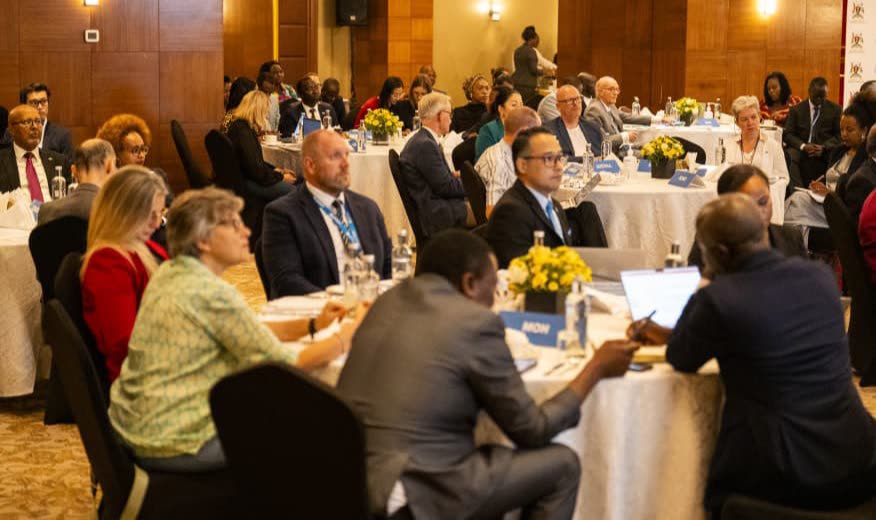
Thank you for reading this post, don't forget to subscribe!The warning was issued by Dr. Diana Atwine, Permanent Secretary of Uganda’s Ministry of Health, after a meeting with World Health Organization (WHO) Director-General Dr. Tedros Adhanom Ghebreyesus and development partners in Kampala on June 9, 2026.
She explained that misconceptions labeling Ebola as a scam or a result of witchcraft are reducing public risk perception and encouraging dangerous behaviors that could speed up transmission.
“A key strategy to end this outbreak quickly is to collectively combat misinformation through continuous awareness. False beliefs that Ebola is a scam or witchcraft lower risk perception, fueling dangerous behaviors that can drive transmission and endanger response teams,” Dr. Atwine stated.
Dr. Atwine cautioned that while Uganda has strengthened surveillance, border screening, testing, and contact tracing systems, widespread community transmission could overwhelm even the strongest systems.
WHO Director-General Dr. Tedros commended Uganda’s response, praising its surveillance, testing, and case management as effective during his visit with President Museveni to review preparedness.
He noted that Uganda’s early detection and swift outbreak declaration helped contain transmission, adding that past Ebola experience has strengthened the country’s emergency capacity.
Dr. Tedros stressed transparency, urging that reporting countries avoid unnecessary travel restrictions. He highlighted cross-border coordination with the Democratic Republic of the Congo (DRC) as critical to ending the outbreak.
“Uganda has shown that transparency, experience, and swift action save lives. Their early detection and rapid outbreak declaration set a powerful example. We must now ensure that countries reporting cases are not punished with travel bans, and that cross-border coordination is strengthened,” the WHO chief emphasized.
Uganda has so far confirmed 19 Ebola cases, including five recoveries and two deaths. Most infections are linked to cross-border transmission from the DRC, where the outbreak remains concentrated.
Health authorities fear the virus could spread further if communities fail to recognize symptoms, report suspected cases, or follow public health guidance.
Experts stress that community engagement is essential to controlling Ebola, especially as past outbreaks faced online scam claims and current travel restrictions have frustrated some individuals.
Health officials say most confirmed Ebola cases in Uganda have been linked to movement across the border from the DRC, underscoring the need for sustained regional collaboration.
If you have a developing story, tip-off, or eyewitness account, reach out to our editorial team today.
📧 Email: westernpearlmedia@gmail.com
📞 Telephone / WhatsApp: +256 783 650 398
Let’s tell your story together—because every voice deserves to be heard.
About the Author