KABALE – The Ministry of Education and Sports has reiterated its support for Minister of Local Government Balaam Barugahara’s ongoing crackdown on head teachers who charge illegal school fees in Universal Primary Education (UPE) and Universal Secondary Education (USE) schools.
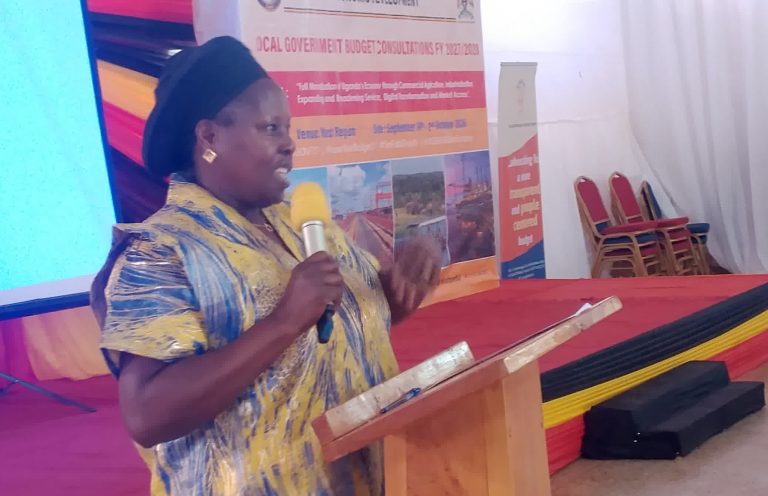
Thank you for reading this post, don't forget to subscribe!The matter came up during the Kigezi Sub-region Local Government Budget Consultation Engagement organized by the Ministry of Finance, Planning and Economic Development in Kabale District.
The Assistant Commissioner in Charge of Secondary Education, Mr. Alfred Kyaka, said Minister Balaam Barugahara had not broken any law by directing the arrest of head teachers accused of collecting school fees from students enrolled in UPE and USE programmes.
Kyaka read Section 10 of the Education Act, 2008 (Cap. 247), which bars anyone from levying or ordering any charge for education in a school implementing Universal Primary Education (UPE) or Universal Post-O-Level Education and Training (UPPET/USE).
He further explained that the law allows money to be collected only under emergency circumstances. However, it explicitly states that such contributions must be voluntary, not mandatory school fees.He added that the Education Act sets strict parameters for these exceptions to ensure schools do not use “emergencies” as a loophole to exploit parents.

“Ladies and gentlemen, we have been breaking the law. Hon. Balaam is acting the way he does only to bring us back in line with the law, which is very clear: charging fees in UPE and USE schools is illegal,” Kyaka said.
CUE IN: KYAKA ON SCHOOL FEES
The Assistant Commissioner was responding to Kanungu District Speaker of Council, Mr. Frank Byaruhanga, who questioned why Balaam was subjecting head teachers to lengthy public interrogations before arresting some of them over school fees.
Byaruhanga added that the fees were usually agreed upon by school management committees and parents to fill gaps caused by insufficient government funding.
“The Government is well aware that it has failed to provide for enough school needs, including human resources. For example, in Kanungu, we have schools with large student enrolments but only seven teachers. If parents permit the head teacher to recruit and pay private teachers to address the problem, why does the Minister come to question them?” Byaruhanga asked.
CUE IN: BYARUHANGA ON SCHOOL FEES
Byaruhanga’s concerns were echoed by Kabale Municipality Principal Education Officer Mr. Grace Munyambabazi, who gave a breakdown of the capitation grant sent to schools annually.
He explained that the Shs 20,000 allocated for each primary school pupil translates to only Shs 6,666 per term, with just Shs 74.89 budgeted for one child per day. He proposed increasing the daily allocation to at least UGX 1,500 for each primary school pupil.
CUE IN: MUNYAMBABAZI ON CAPITATION GRANT
Rubanda District Planner Mr. Wilberforce Korugyendo proposed that, if the Government was unable to increase funding for UPE and USE programmes, particularly the capitation grant, the Education Act should be amended to allow parents to contribute.
CUE IN: KORUGYENDO ON CAPITATION GRANT
Meanwhile, Kanungu Deputy Resident District Commissioner Mr. Gad Rugaju expressed concern that Minister Balaam Barugahara’s anti-corruption crusade was targeting only local governments, where the issues were smaller in magnitude than those at the central government level.
“There are bigger issues in institutions and projects directly run by the Central Government than at the district level. Who is going to act on the culprits involved if Minister Balaam is concentrating only on smaller issues in local governments?” he asked.
In response, the session chairperson, Ms. Kabakumba Masiko, the Director of Wealth Creation and Social Action Funds, who represented the Minister of Finance, clarified that Balaam was operating within local government boundaries because that was his portfolio as Minister in Charge of Local Governments.
However, she advised local leaders to forward corruption reports concerning central government projects to the Inspectorate of Government (IGG), whose office has a broader mandate in the fight against corruption.
Minister Henry Musasizi, through his statements read by Ms. Kabakumba, challenged the Local Government Leaders and Technocrats to align their plans and policy implementation programs with the tenfold Economic growth strategy that aims at increasing the National GDP to USD 500 Billion by 2040.
The Minister asked the participants to encourage people within their local governments to embrace the strategy by embracing the Government initiatives designed for Wealth Creation, especially the Parish Development Model.
About the Author