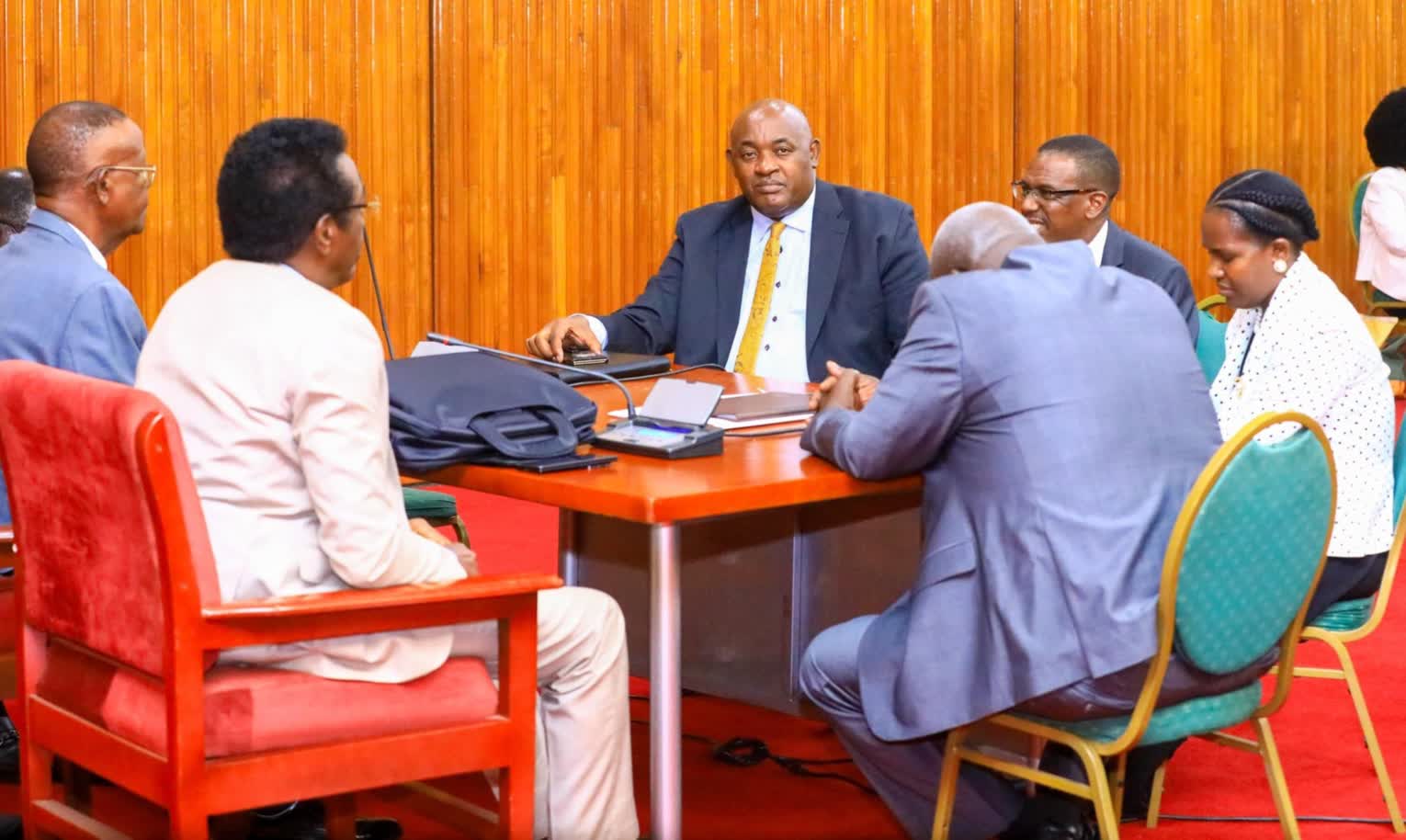
KAMPALA – The Appointments Committee of Parliament, chaired by the Rt. Hon. Jacob Oboth Oboth, has officially commenced the critical vetting of presidential nominees for ministerial positions.
Thank you for reading this post, don't forget to subscribe!The high-stakes exercise, which will determine the composition of President Yoweri Museveni’s new Cabinet for the 2026–2031 term, is slated to run up to Tuesday, June 2, 2026.
A total of 81 nominees are set to appear before the committee, including over 30 full Cabinet Ministers and 51 Ministers of State who were nominated by the President last week.
The development follows Parliament’s recent approval of an increase in the cap for full Cabinet Ministers from 21 to 31, and for Ministers of State from 21 to 51, reflecting the administration’s broader governance agenda for the upcoming term.
Under the rules of procedure, specifically Rule 173, the Committee is mandated to approve, on behalf of Parliament, persons nominated for appointment by the President under the Constitution.
Speaking to the press moments after undergoing a vetting session, the Minister-designate for Agriculture, Hon. Frank Tumwebaze, pledged to work closely with the Ministry of Finance to open up favorable loan interest rates for farmers.
He further emphasized a cluster-based approach to support all categories of farmers, including small, medium, and large-scale agricultural producers.
“We shall work hand in hand with the Ministry of Finance to secure cheaper credit for our farmers, ensuring that every cluster benefits from favorable loan rates at the Uganda Development Bank and other government financial institutions,” Minister-designate Tumwebaze stated.
Hon. Eng Asiimwe Jonard, the nominee for Minister of Science, Technology, and Innovation, underscored the transformative role of innovation across all sectors of the economy, including health, agriculture, and information technology.
He further emphasized that high performance and innovative solutions are essential to solving challenges in a short time, signaling a continued push by the incoming administration to embed technology into Uganda’s broader development framework.
After the vetting procedure sessions, the Appointments Committee will table its report in Parliament for a deep MPs’ debate, and once approved, the names will go back to the President for formal appointment.
The appointed Ministers will be sworn in before the President at State House, Entebbe, followed by assumption of office, during which the Permanent Secretaries will hand over files, budgets, and ongoing projects.
About the Author