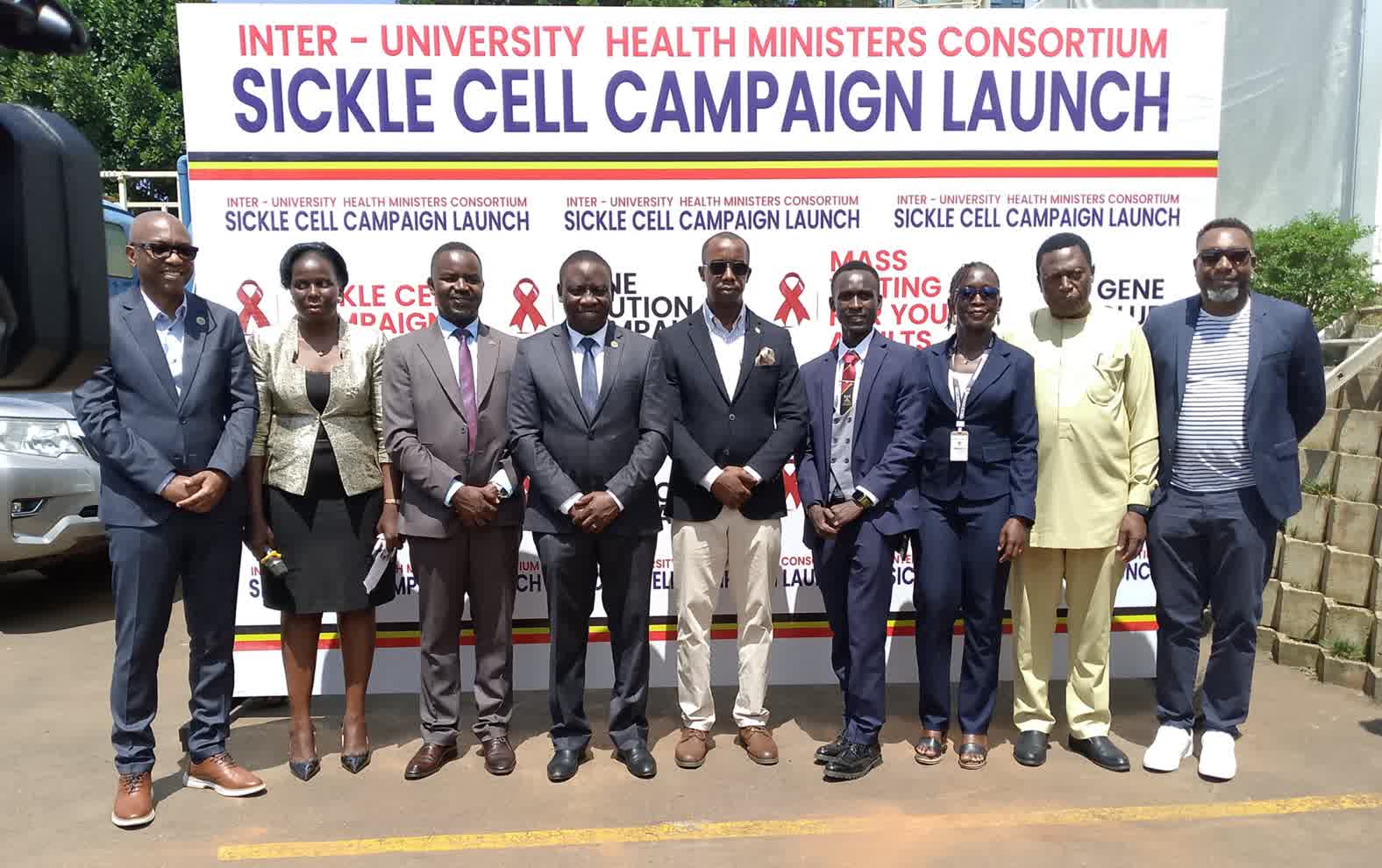
KAMPALA – The Ministry of Health has partnered with the Inter-University Health Ministers Consortium to launch a nationwide sickle cell disease screening and awareness campaign targeting university students across Uganda.
Thank you for reading this post, don't forget to subscribe!The ambitious programme, unveiled last week at the Ministry of Health, aims to reduce childbirths involving the inherited blood disorder by empowering youth with genetic knowledge before they make life-changing reproductive decisions.
The campaign builds on Uganda’s recently introduced newborn sickle cell screening programme and marks a strategic shift towards prevention rather than relying solely on treatment after children are born with the disease.
Ministry of Health statistics reveal that approximately six million Ugandans carry the sickle cell trait and 25,000 babies are born with the disease annually, placing Uganda among the ten African nations with the highest burden of the condition.
National Sickle Cell Coordinator Dr. Miriam Ajambo underscored the urgency of reaching young people through universities before they make life-altering reproductive decisions.
She explained that understanding sickle cell carrier status prior to marriage enables informed choices that can significantly reduce the number of children born with the disease.
“Universities offer a key chance to reach young people before they start families. If they know their sickle cell status before marriage, they can make wise choices and greatly lower the risk of having children with the disease,” Ajambo said.
The Inter-University Health Ministers Consortium brings together health ministers from over 80 public and private universities and tertiary institutions to champion sickle cell education and screening on their campuses.
Dr. Charles Olaro, Director General of Health Services, noted that thousands of Ugandan children are born with sickle cell disease each year while many carriers remain unaware of their status.
He identified university students as a key target group, stating that testing before marriage enables informed choices and helps reduce the number of children born with the condition.
“University students are a key target group because many are beginning to make decisions about marriage and future families,” Olaro said.
The consortium was officially launched by Primary Health Care Minister Dr. Charles Ayume, who reaffirmed the government’s commitment and the value of reaching communities through student leaders.
Minister Ayume announced that locally manufactured WHO-approved test kits are now being supplied to Makerere University and will extend to all participating institutions, with supplies contingent on proper accountability.
“We shall continue supplying these test kits as long as there is proper accountability. This programme is not a one-off intervention. We want every young Ugandan to know their sickle cell status before they begin raising families,” Ayume stated.
The Minister further stressed that the programme is a sustained effort to ensure every young Ugandan knows their status before starting families, while children screened at birth will eventually grow up already aware of their genetic makeup.
Makerere University Health Minister Ebenezer Wamezaya welcomed the partnership as the institution set up a major medical camp targeting 10,000 students for free sickle cell screening.
He noted that early testing is vital since most young people remain unaware of their status, information that can influence important life choices down the road.
“We want students to understand why it is important to know their status early. Many young people have never been tested, yet this information can influence important decisions later in life,” Wamezaya said.
The campaign will initially target first-year students during orientation, with student health ministers leading awareness drives and coordinating screening exercises on their campuses.
If you have a developing story, tip-off, or eyewitness account, reach out to our editorial team today.
📧 Email: westernpearlmedia@gmail.com
📞 Telephone / WhatsApp: +256 783 650 398
Let’s tell your story together—because every voice deserves to be heard.
About the Author