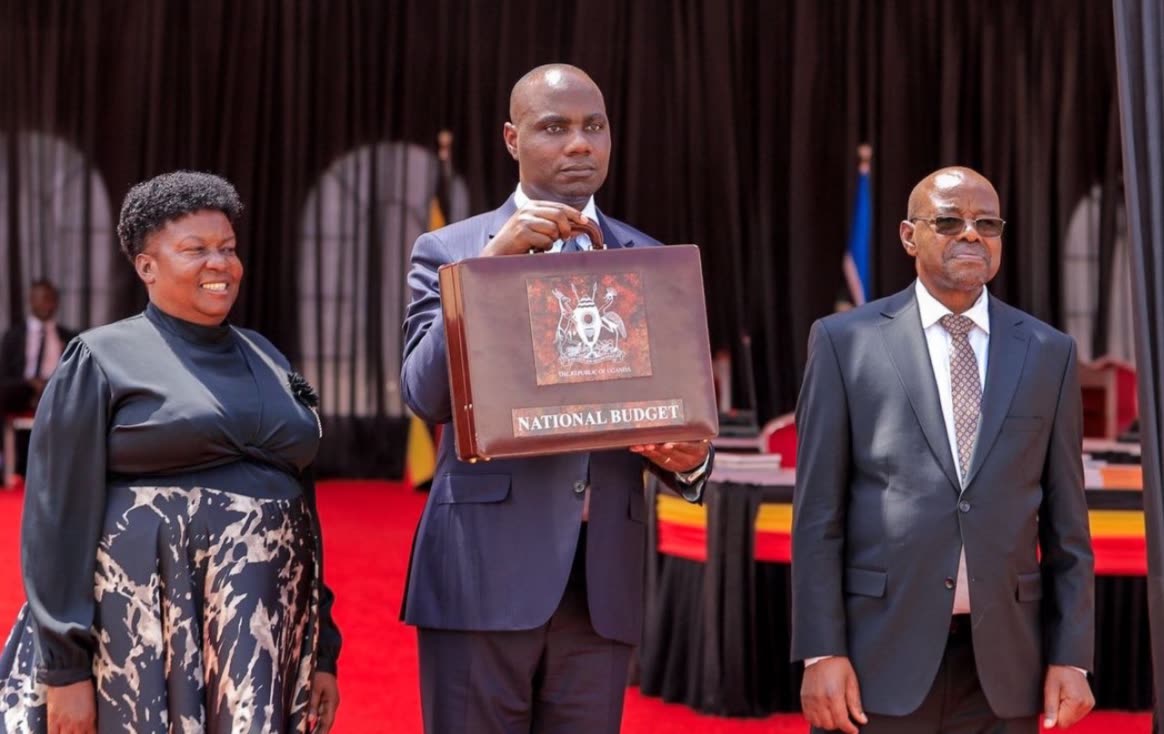
KAMPALA – The government of Uganda unveiled a raft of tax hikes in the record Shs 84.4 trillion national budget for the 2026/27 financial year, dubbed the “Kisanja No More Sleep.”
Thank you for reading this post, don't forget to subscribe!Presenting the 2026/27 budget, Finance Minister Henry Musasizi announced that Parliament approved multiple tax hikes within the Shs 84.39 trillion envelope, moves that will directly raise Ugandans’ cost of living.
Musasizi explained that increasing domestic revenue is not merely a fiscal goal but a fundamental sovereignty objective, one that strengthens Uganda’s policy autonomy and economic resilience for generations to come.
The Minister described a resilient Ugandan economy entering a new political term from a position of strength, with 6.4 percent growth projected for the current fiscal year.
Oil production set to begin this year will accelerate growth to 10.2 percent in FY 2026/27, marking Uganda’s first double-digit growth since the 1990s as the economy reaches USD 69.3 billion.
To finance the Shs 84.39 trillion budget, Parliament approved tax hikes on fuel, alcohol, and cement, though Musasisi stressed that raising domestic revenue is both a fiscal goal and a sovereignty objective.
Key tax changes effective next fiscal year include:
· Fuel: Excise duty on diesel and petrol increased by Shs 200 per litre (expected to generate Shs 450 billion).
· Alcohol: Excise duty on spirits like Uganda Waragi, Black Label, and Cognac doubled from Shs 1,700 to Shs 3,500 per litre.
· Cement & Sugar: A 50kg bag of cement will now attract Shs 750 (up from Shs 500), while sugar will cost Shs 200 per kilogram (up from Shs 100).
· Mitumba (Used Clothing): The environmental levy on imported used clothing doubled from 15% to 30% of the CIF value to support local manufacturing.
· Motorcycles: First registration fees for motorcycles tripled from Shs 200,000 to Shs 500,000.
· Betting: Tax on gaming proceeds was hiked from 20% to 30%.
Meanwhile, low-income workers received relief as the government raised the PAYE threshold from Shs 235,000 to Shs 335,000 per month, putting more money into the pockets of formal employees.
The Minister announced that 95.6 percent of discretionary resources will go towards the four ATMS pillars of Agro-industrialisation, Tourism, Mineral-based industrialisation, and Science, Technology and Innovation.
· Agro-industrialisation: Receiving the highest allocation ever (Shs 2.26 trillion), the government will focus on irrigation, research (including the new anti-tick vaccine), and moving from raw commodities to value-added products.
· Oil & Gas: With construction of the East African Crude Oil Pipeline (EACOP) nearing completion and 199 wells already drilled, Shs 473.51 billion has been set aside to finalize preparations for First Oil.
· Science & Innovation: A total of Shs 1.14 trillion has been allocated. The government will push for commercialization of Kiira Motors vehicles and the establishment of a new Hi-Tech City.
Infrastructure and Security
The budget prioritizes transport and energy as the “bone marrow” of the economy.
· Standard Gauge Railway (SGR): Construction of the 273-kilometer Malaba–Kampala line has commenced, expected to slash transport costs from Mombasa by more than half.
· Kampala Roads: The government has paved 297 kilometers in the Greater Kampala Metropolitan Area and plans to upgrade over 600 kilometers in the next five years.
· Security: Shs 10.21 trillion has been allocated to security and rule of law institutions, including continued modernization of the UPDF and full equipping of the new National Referral Military Hospital in Mbuya.
It should be noted that state-funded celebrations on public holidays have been suspended going forward, except for religious holidays, to eliminate wasteful expenditure.
The government has further rallied Ugandans to actively engage in wealth creation, dedicating the financial plan to the youth who will drive the nation toward its 500-billion-dollar goal.
If you have a developing story, tip-off, or eyewitness account, reach out to our editorial team today.
📧 Email: westernpearlmedia@gmail.com
📞 Telephone / WhatsApp: +256 783 650 398
Let’s tell your story together—because every voice deserves to be heard.
About the Author