KAMPALA – The Uganda Albinos Association (UAA) has called on the government to significantly increase funding for skin cancer prevention, treatment, and care, arguing that inadequate resources have left them marginalised.
Thank you for reading this post, don't forget to subscribe!The Association members presented their demands in a petition handed over to Uganda Cancer Institute (UCI) Executive Director Dr. Jackson Orem on June 10, 2025, at the institute’s headquarters in Mulago, Kampala.
Despite being among the groups most vulnerable to skin cancer due to their lack of melanin, people with albinism say skin cancer remains a neglected area within Uganda’s cancer care system.
The Uganda Albinos Association (UAA) Executive Director, Jude Sebyanzi, expressed frustration over the minimal progress in implementing the National Action Plan on Albinism 2020-2025.
He cited limited cancer screening, costly radiotherapy, and poor funding for skin cancer prevention as barriers leaving people with albinism marginalised and at risk of death.
“We have seen minimal progress on the National Action Plan on Albinism 2020-2025. Limited cancer screening, costly radiotherapy, and poor funding for skin cancer prevention are leaving our people marginalised and at risk of death,” said Sebyanzi.
The petition emphasises Uganda’s ratification of the United Nations Convention on the Rights of Persons with Disabilities (UN CRPD), particularly Article 25, which guarantees inclusive health services and adequate healthcare.
Allan Musoke, a person with albinism from Kayunga district, urged the government to reduce taxes on sunscreen lotions, which he considers essential for daily survival.
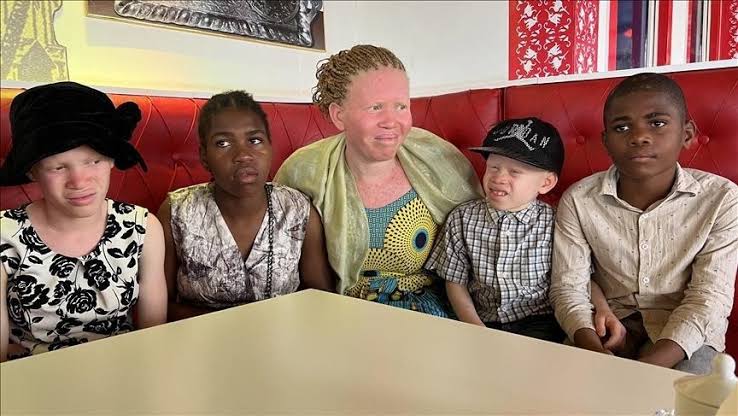
He noted that he comes from a family of four albino children born to parents with dark skin, and they are often treated as if they are luxuries when requesting these necessary drugs.
Musoke said only the Missionaries of the Poor in Busega supported him as a child, and urged the government to provide free cancer screening, subsidised treatment, and tax-free sunscreens.
Diana Friday, a community leader from Kayunga District, said sunscreen costs between UGX 150,000 and over UGX 300,000, making it unaffordable for most families, and criticised UCI for prioritising other cancers while neglecting melanoma of the skin.
“Uganda Cancer Institute (UCI) only prioritises breast cancer, cervical cancer, prostate cancer, esophageal cancer and Kaposi sarcoma without putting in mind that melanoma of the skin affects our lives so much,” Friday stated.
Research conducted by the Albinism Umbrella in 2022 indicates that up to 80% of persons with albinism die from skin cancer, underscoring the urgent need for improved prevention and treatment.
Uganda’s 2024 census shows that persons with disabilities comprise 13.2 percent of the population, totalling 5,522,588 people, including 37,579 males and 41,297 females with albinism.
Dr Jackson Orem said resource allocation falls under Parliament’s mandate, which funds national priorities, and medical principles guide the institute to focus on the largest number of patients given the limited budget.
UCI handles nearly 36,000 patients annually and offers free cancer screening to persons with albinism, though regional centres lack equipment for complicated cases and many do not reach the institute for guidance.
The UAA maintains that without targeted funding, better sunscreen access, and a focus on skin cancer, thousands of Ugandans with albinism will continue dying from a largely preventable cancer.
If you have a developing story, tip-off, or eyewitness account, reach out to our editorial team today.
📧 Email: westernpearlmedia@gmail.com
📞 Telephone / WhatsApp: +256 783 650 398
Let’s tell your story together—because every voice deserves to be heard.
About the Author