KAMPALA – The government has equipped 270 healthcare workers with advanced hands-on training in comprehensive newborn care, as part of a national drive to strengthen maternal and child health services in Uganda.
Thank you for reading this post, don't forget to subscribe!The milestone was announced during a graduation ceremony for the first cohort of the Comprehensive In-Service Newborn Care Training programme, held on June 5, 2026, at St. Francis Hospital Nsambya.
According to Dr. Andrew Twinamatsiko, a programme manager at SEED Global Health, Uganda loses an estimated 45,000 babies annually, a figure that is nearly entirely preventable when compared to countries with far lower neonatal mortality rates.
“If you compare us with countries such as Japan, Sweden, or South Korea, which have a peri-neonatal mortality rate of 1 to 2 per 10,000 live births, this means nearly all these deaths are preventable,” Dr. Twinamatsiko said.
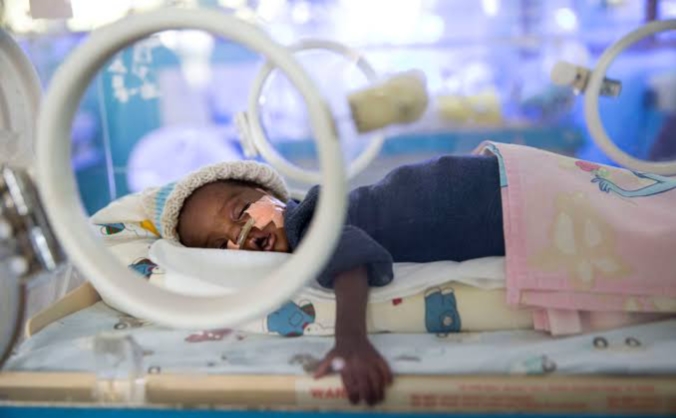
Dr. Twinamatsiko said that the common causes of newborn deaths include infections, birth asphyxia, and complications from preterm birth, with most babies dying within the first 24 hours of life.
He added that many deaths occur during referrals, as failing to resuscitate, manage, and stabilise a newborn within the golden minute can lead to mortality or lifelong disability.
“Most babies die along the referral process. If you don’t resuscitate, manage, and stabilise this baby in the golden minute, even if you are referred, you will have mortality or long-term morbidity,” he warned.
The Ministry of Health-certified programme equips frontline health workers, including midwives, doctors, and nurses, with advanced practical skills for caring for premature, low-birthweight, and critically ill newborns.
The training, implemented by the ministry in partnership with Bulamu Healthcare and the Mama Toto Programme, has already trained over 2,000 health workers in related areas, with the third cohort alone training 104 workers across various facilities.
The newly trained 270 healthcare workers are to be rolled out across 14 districts, offering continuous mentorship to help establish functional newborn units and reduce unnecessary referrals.
Dr. Victoria Nakibuuka, a consultant neonatologist at St. Francis Hospital Nsambya, stated that training nurses is a vital intervention because they spend more time with babies than doctors do.
She added that nurses feed the babies, go to the theatres, administer drugs, and resuscitate them, yet the facility currently loses 2.8 percent of its newborns.
Meanwhile, the hospital’s human resource manager, Harriet Nakyeyune, shared a personal story of giving birth to a 900-gram premature baby in 1991 when there was no intensive care unit.
She advised mothers to be selfish in protecting their babies from infections, warning that excessive curiosity from villagers can expose fragile newborns to germs.
“I gave birth to a premature baby in 1991 weighing 900 grammes. There was no NICU then. Today, to save your baby from infections, be selfish,” Harriet said.
Dr. Richard Kalungi, programme manager of Mama Toto Care Uganda, explained that when a child reaches five years of age, the chances of death are nearly halved.
However, before making that five-year milestone, Dr. Richard said, every newborn must first survive the critical first hour, first day, first week, and first month of life.
About the Author