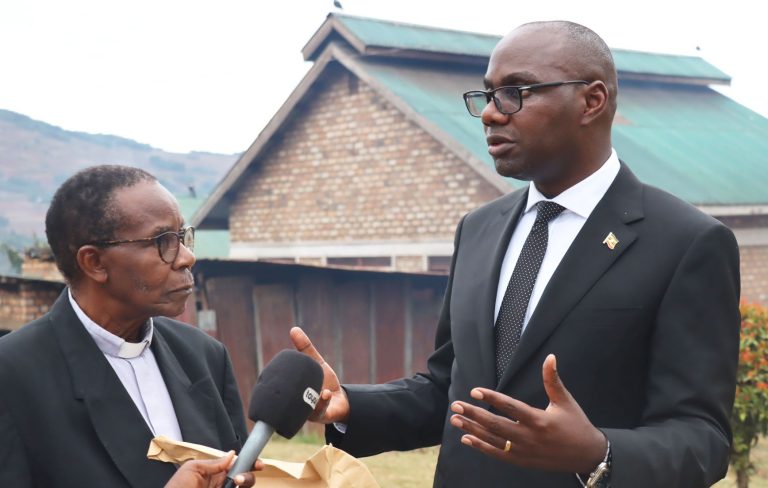
KANUNGU, UGANDA – The Ministry of Agriculture, Animal Husbandry and Fisheries (MAAIF) has launched the decentralization of crop inspection and certification services in Kanungu District.
Thank you for reading this post, don't forget to subscribe!The initiative, which was introduced during a stakeholder engagement meeting on Friday, aims to bring vital regulatory services closer to the grassroots to boost agricultural productivity and shield farmers from counterfeit inputs.
The meeting brought together a united front of district leaders, extension workers, agro-input dealers, processors, farmer groups, and media, all focused on a common goal: enhancing farm yields and protecting the livelihoods of local farmers.
Presiding over the meeting, the Resident District Commissioner (RDC), Mwesigye Ambrose, commended MAAIF for selecting Kanungu for the pivotal launch.
The RDC stated that decentralizing these services will strengthen local monitoring and accountability, a critical move for safeguarding agricultural productivity and public health.
“Our farmers must be protected from the dangers of fake products that threaten their harvests and our well-being,” RDC Ambrose stated.
He also announced the establishment of a new zonal office in Kabale District, designed to promote fair trade practices aligned with international standards and reduce barriers in crop production and marketing.
Asiimwe Ronald, a Senior Agriculture Inspector from the new zonal office, detailed the framework for the decentralization programme.
He announced that a newly formed Kigezi region cluster (KAZARD) will act as a central hub for efficient inspection and certification services.
The stakeholder discussions yielded a strong consensus on the urgent need for stronger local enforcement and public awareness campaigns against counterfeit agro-inputs.
Participants also agreed on the necessity of mandatory dealer registration and capacity-building initiatives for farmers and traders to effectively combat the crisis.
District Production Officer Godwin Nkwasiibwe urged farmers to see the new regulations as a vital shield against pests and diseases.
He reassured dealers that cooperation would yield benefits, as certified inputs would open doors to broader, more lucrative markets.
Twinamatsiko Dan, Kanungu’s Commercial Officer, highlighted the synergy with the ongoing Parish Development Model (PDM), which has injected 30.045 billion shillings into 29,681 local beneficiaries for agro-based enterprises.
“With over 30 billion shillings invested in our farmers through the Parish Development Model, the success of this massive investment hinges on one critical factor: the guaranteed availability of quality, affordable agricultural inputs,” Dan asserted.
District Councillor Tutuhukire Rogers, Chairperson of the Finance Committee, delivered a vote of thanks on behalf of the District Chairperson, pledging full political backing for the initiative.
“Understanding this decentralization is key. We are committed to supporting this transformative programme, which we believe will enhance quality production and improve livelihoods across our region,” he stated.
This stakeholder engagement marks a new chapter for agriculture in Kanungu, paving the way for improved farming practices, sustainable development, and a more secure future for the district’s farmers.
About the Author