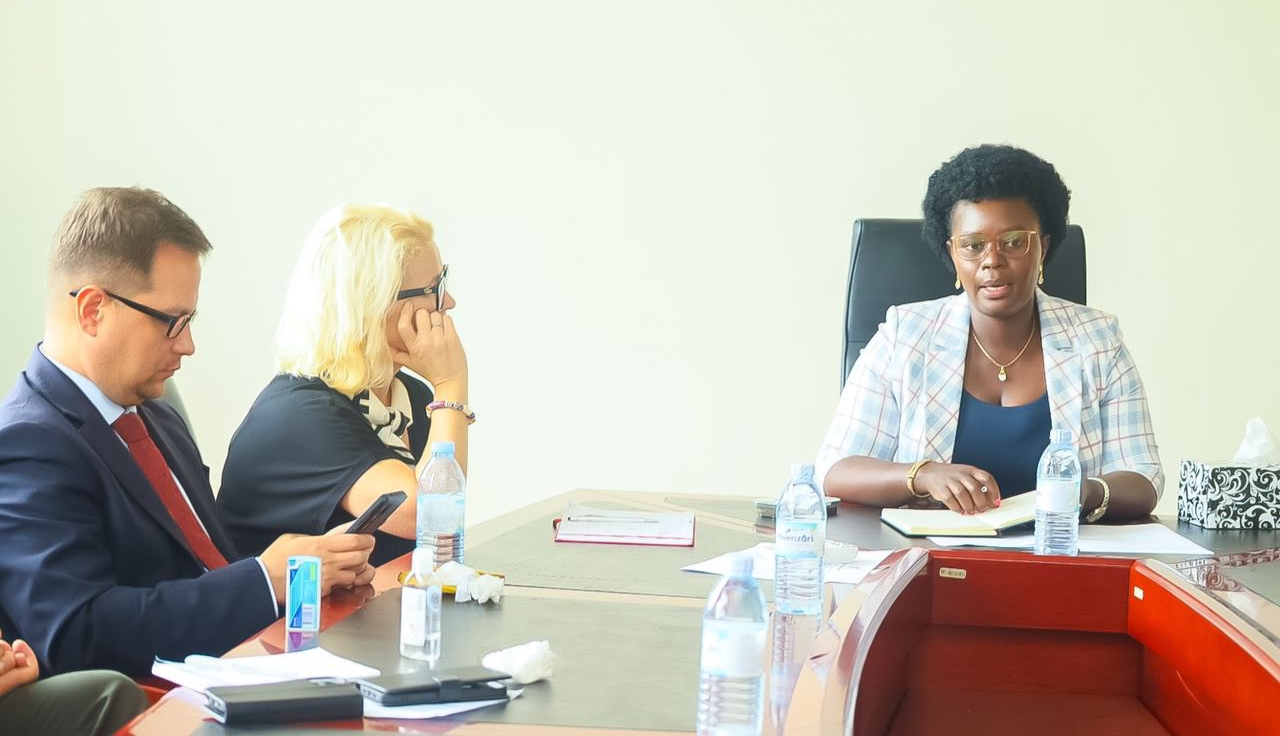
KAMPALA, UGANDA – The Minister of State for Disaster Preparedness, Relief and Refugees, Hon. Lillian Aber, has called for stronger international partnerships to address the growing humanitarian needs in host communities, reiterating Uganda’s commitment to its progressive refugee policy.
Thank you for reading this post, don't forget to subscribe!The Minister, who also serves as the Kitgum District Woman Representative, made the remarks on Thursday during a high-level meeting with a delegation from the Finnish Parliament at her office in Kampala.
The meeting focused on the current refugee situation and the ongoing strain on essential services in regions accommodating large numbers of asylum seekers.
Hon. Aber highlighted Uganda’s longstanding tradition of offering sanctuary to those fleeing conflict and persecution.
Uganda, one of the world’s largest refugee-hosting nations with over 1.5 million refugees, maintains a unique policy that grants them freedom of movement, the right to work, and access to land.
“Uganda still welcomes all refugees and treats them with respect and care. But as more people arrive, the needs are growing. We need other countries to work with us more closely and keep helping us, so that both refugees and the communities they live in can get basic things like a place to live, schooling, medical care, and ways to earn a living,” stated Minister Aber.
Despite global praise for Uganda’s refugee policy, the large number of people arriving from conflicts in neighboring countries is straining schools, hospitals, and natural resources to their limits.
Finland has been a consistent donor to refugee programs in the region, often channeling funds through international organizations and direct bilateral support.
With a refugee population exceeding 1.5 million,Uganda’s asylum-seekers are predominantly from neighboring countries, led by South Sudan which accounts for 62% of the total.
The Democratic Republic of the Congo follows at 29%, while smaller groups from Burundi and Somalia make up the balance, as reported by the UNHCR.
The discussions between the officials are expected to pave the way for further cooperation in areas such as sustainable livelihoods, environmental protection, and strengthening local government systems in refugee-affected districts.
About the Author