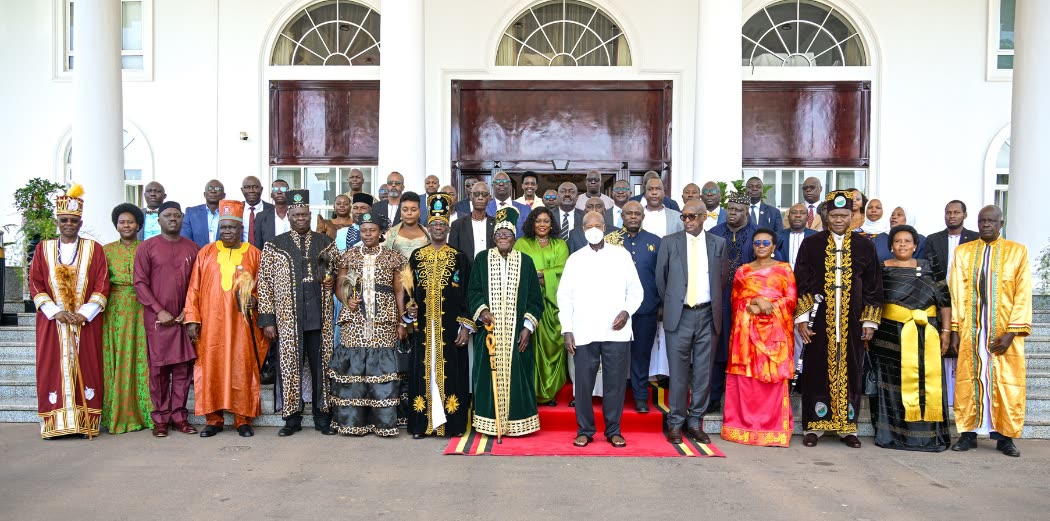
ENTEBBE – President Museveni has challenged traditional and cultural leaders to take a more active role in preserving Africa’s heritage, promoting continental unity, and supporting government efforts to transform communities through wealth creation.
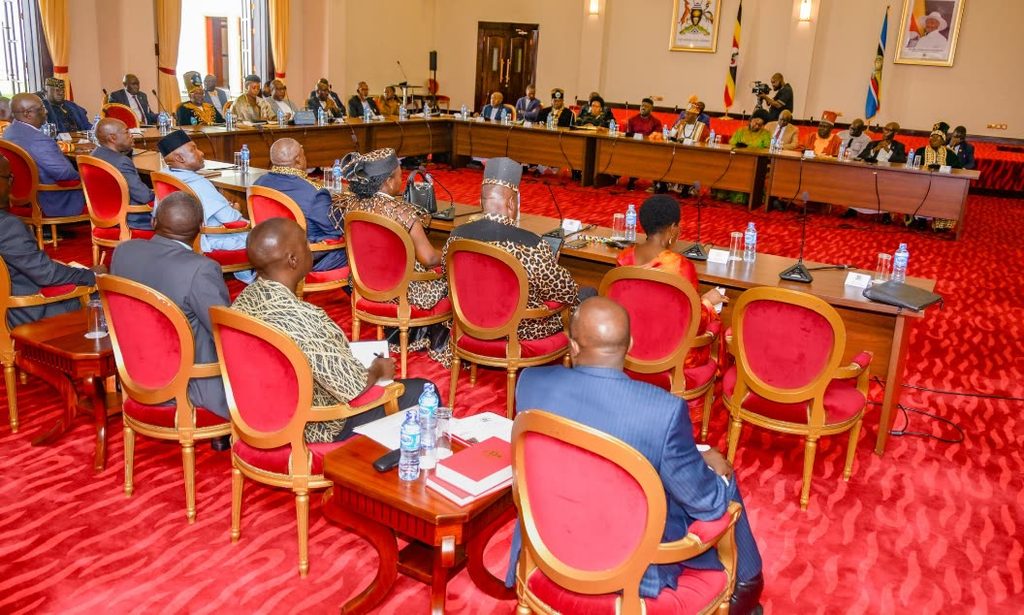
Thank you for reading this post, don't forget to subscribe!The President made the remarks on Wednesday, November 4, 2026, while addressing traditional and cultural leaders on the first day of a two-day conference at State House, Entebbe.
President Museveni noted that cultural institutions have a critical responsibility to safeguard Africa’s historical identity, indigenous knowledge, languages, traditional skills and cultural practices, many of which were undermined by colonialism.
He said Africa’s shared history, cultural heritage and linguistic connections should serve as a foundation for strengthening cooperation, economic integration and unity among African countries.
“We must safeguard our historical identity, indigenous knowledge, languages and traditional skills, and use our shared heritage as a foundation for cooperation, economic integration and unity among African countries,” President Museveni said.
The President further urged Africans to overcome artificial divisions and recognise their common heritage and shared interests, stressing that unity and cooperation are essential for the continent’s progress.
Meanwhile, the President emphasised that cultural institutions should complement, rather than compete with, elected government structures, noting that each institution has its own distinct responsibilities.
“Cultural institutions should complement, not compete with, elected government, since each has its own responsibilities. Cultural leaders should focus on preserving heritage, promoting local knowledge and advising communities, while leaving laws and public administration to government institutions,” the President emphasised.
He cautioned against the politicisation of cultural institutions, saying their role should remain rooted in cultural preservation, community guidance, and social cohesion.
President Museveni further urged cultural leaders to promote indigenous food systems, traditional crops, and livestock breeds as part of efforts to strengthen food production, household incomes, and economic resilience.
The Minister of Gender, Labour and Social Development, Betty Amongi, urged cultural leaders to work closely with the government in addressing social challenges affecting communities.
She highlighted gender-based violence, harmful cultural practices, child marriage, teenage pregnancy, poverty, unemployment, and discrimination against persons with disabilities as issues requiring collective action.
The Minister also drew attention to the economic potential of Uganda’s creative and cultural industries, commonly referred to as the Orange Economy.
The sector encompasses music, film, performing arts, fashion, crafts, cultural tourism, publishing, design, and digital creativity, which she said offer opportunities for employment, enterprise development, and economic growth.
The two-day conference brought together traditional and cultural leaders from different communities across Uganda to discuss cultural preservation, indigenous knowledge, social development, and their role in national transformation.
About the Author