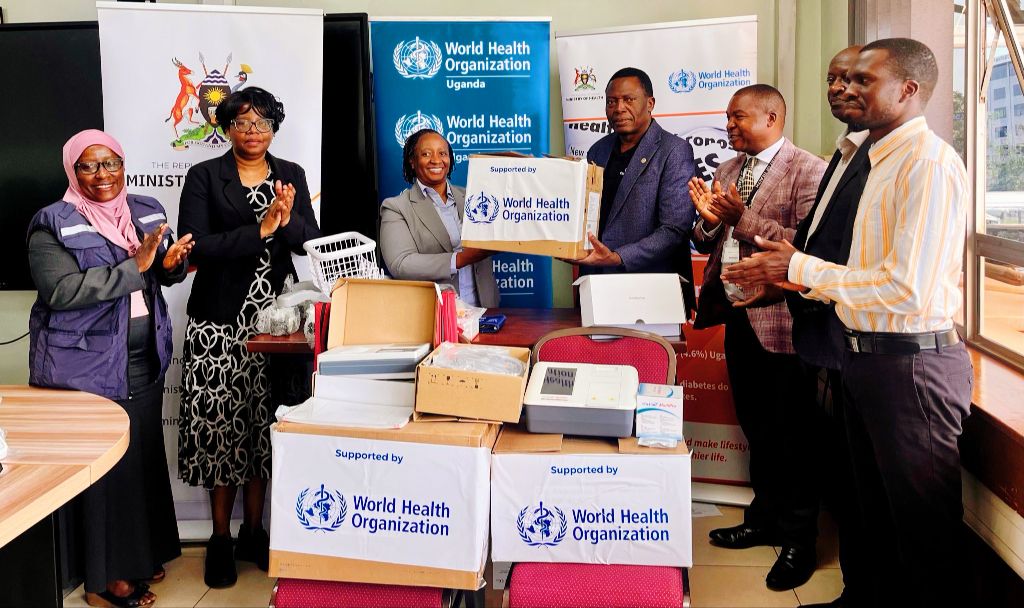
KAMPALA, UGANDA – Uganda’s Ministry of Health has handed over diagnostic equipment to 40 health facilities to combat the rising burden of non-communicable diseases, which have doubled in the past five years.
Thank you for reading this post, don't forget to subscribe!With crucial support from the World Health Organization (WHO), the Ministry has equipped facilities in Sembabule, Kabale, Koboko, and Lira district with diagnostic tools to curb the alarming rise of hypertension and diabetes cases.
According to Dr. Olaro Charles, the Director General of Health Services, a new initiative will integrate screenings for non-communicable diseases (NCDs) like high blood pressure and high blood sugar into existing services for HIV, tuberculosis, and malnutrition.
The integration means patients visiting clinics for specific conditions like HIV or TB will now have easier access to NCD checks, promoting a more comprehensive and holistic approach to their healthcare.
Dr. Olaro advocated for a more proactive national health strategy, stressing that while the current intervention targets high-burden districts, access to these health tools should be standard nationwide to strengthen prevention and early detection for everyone.
“These districts were selected because of their high disease burden; however, that should not be the only criterion. We should not wait for a district to experience a high burden before providing such support,” Dr. Olaro stated.
He emphasized that the new equipment must be paired with strong public health messaging focused on prevention, aiming to integrate early screening into primary care and ensure all necessary tools are in place for its success.
Dr. Kasonde Mwinga, the WHO Uganda Country Representative, emphasized that simply handing over medical equipment is insufficient without a robust support system, including strong health systems and skilled personnel.
He reaffirmed the World Health Organization’s commitment to collaborating with the Ugandan government to strengthen non-communicable disease surveillance.
This handover marks a pivotal shift towards decentralizing NCD care, moving essential diagnostic capabilities from national referral hospitals to the front lines of primary healthcare.
About the Author