KAMPALA – The Ministry of Health has confirmed that Uganda remains Ebola-free, with no new cases registered since the country declared the outbreak over in July this year, even as neighbouring countries struggle to contain the disease.
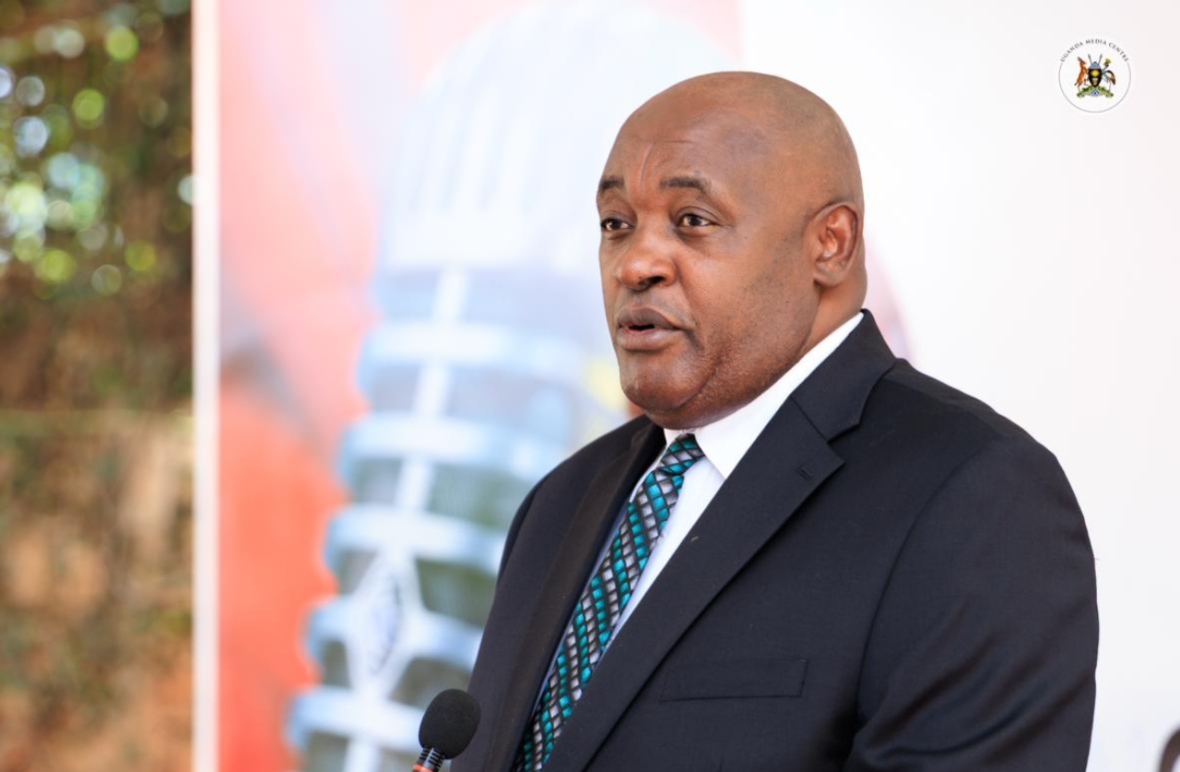
Thank you for reading this post, don't forget to subscribe!The development was announced by the Minister of Health, Dr. Chris Baryomunsi, while addressing the press at the Uganda Media Centre over the weekend on the current situation regarding Ebola containment.
Uganda confirmed an outbreak of Bundibugyo virus disease on 15 May 2026 following a cross-border introduction involving DRC nationals seeking care in Ugandan hospitals.
Minister Baryomunsi noted that through a coordinated response, the country successfully interrupted local transmission and declared the outbreak over on 28 July 2026, with no new confirmed cases recorded since.
The Minister cautioned that the risk has not ended, noting that Uganda shares borders with the DRC, where transmission continues, and that communities remain closely connected, with recent traveller cases underscoring the need for vigilance.
“We share a border with the DRC, where transmission continues, and our communities remain closely connected through trade, travel and family ties. The recent cases involving travellers from the region further underscore the need to remain vigilant,” noted Minister Baryomunsi.
Ministry of Health Permanent Secretary Dr. Diana Atwine said all 60 contacts linked to the recent Kenyan traveller’s Ebola case completed their 21-day follow-up and were discharged, including staff at points of entry and exit, hotels, and transport operators.
Dr. Atwine noted that the response reflects the dedication of health workers responding to the outbreaks, whose sustained efforts in identifying contacts and conducting daily monitoring were central to this achievement.
“We had all 60 contacts linked to the Kenyan traveller’s Ebola case complete their 21-day follow-up and be discharged. This is a big milestone for Uganda and shows the dedication of our health workers, whose efforts in tracing contacts and daily monitoring made it possible,” noted PS Dr. Diana Atwine.
She added that investigations into the Nigerian Ebola case are ongoing with Nigerian authorities and international agencies, reviewing genomic findings and verifying travel details, with results to be shared later.
The officials confirmed that Uganda has intensified screening at Entebbe Airport and all land borders, requiring every traveller, including diplomats and UN staff, to complete a Passenger Locator Form and undergo Port Health screening.
District teams have strengthened reporting of suspected fevers, while the Ministry is working with the tourism sector on hotel hygiene and with immigration, security, and district authorities to identify individuals for assessment.
Under National Task Force directives, contacts of active cases are placed on a no-fly list until completing the 21-day follow-up, contacts of suspected cases undergo precautionary quarantine, and cross-border movement is restricted to essential travellers.
Uganda has since deployed over 120 personnel to Aru, Kasenyi, and Butembo in the DRC, where three treatment units with 240 beds have cared for 127 confirmed patients at death rates far below the DRC’s 48.2%, with a fourth unit opening in Bulongo this week.
The officials added that mobile labs have cut result turnaround from four to five days to about four to six hours, with capacity for 2,200 daily tests, while Uganda has trained 748 Congolese health workers across 150 facilities in infection prevention and care.
About the Author