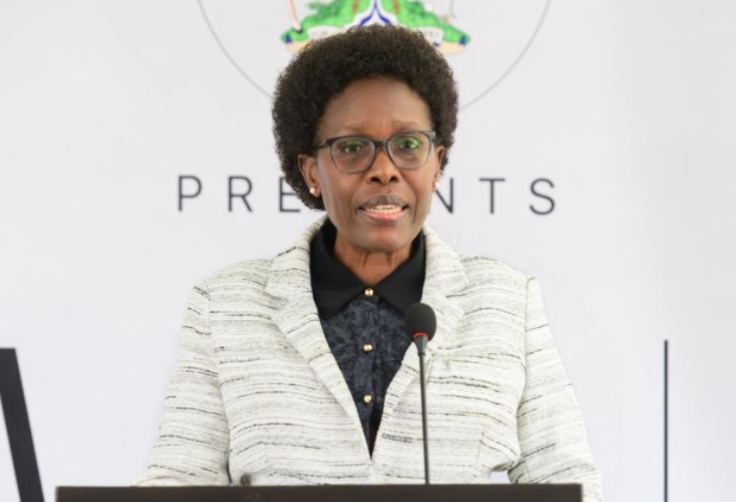
RUBANDA – The Minister of Health Dr. Chris Baryomunsi has confirmed that the government is contemplating a proposal to prohibit public medical workers from practicing in privately owned health facilities after waiving taxes on their salaries.
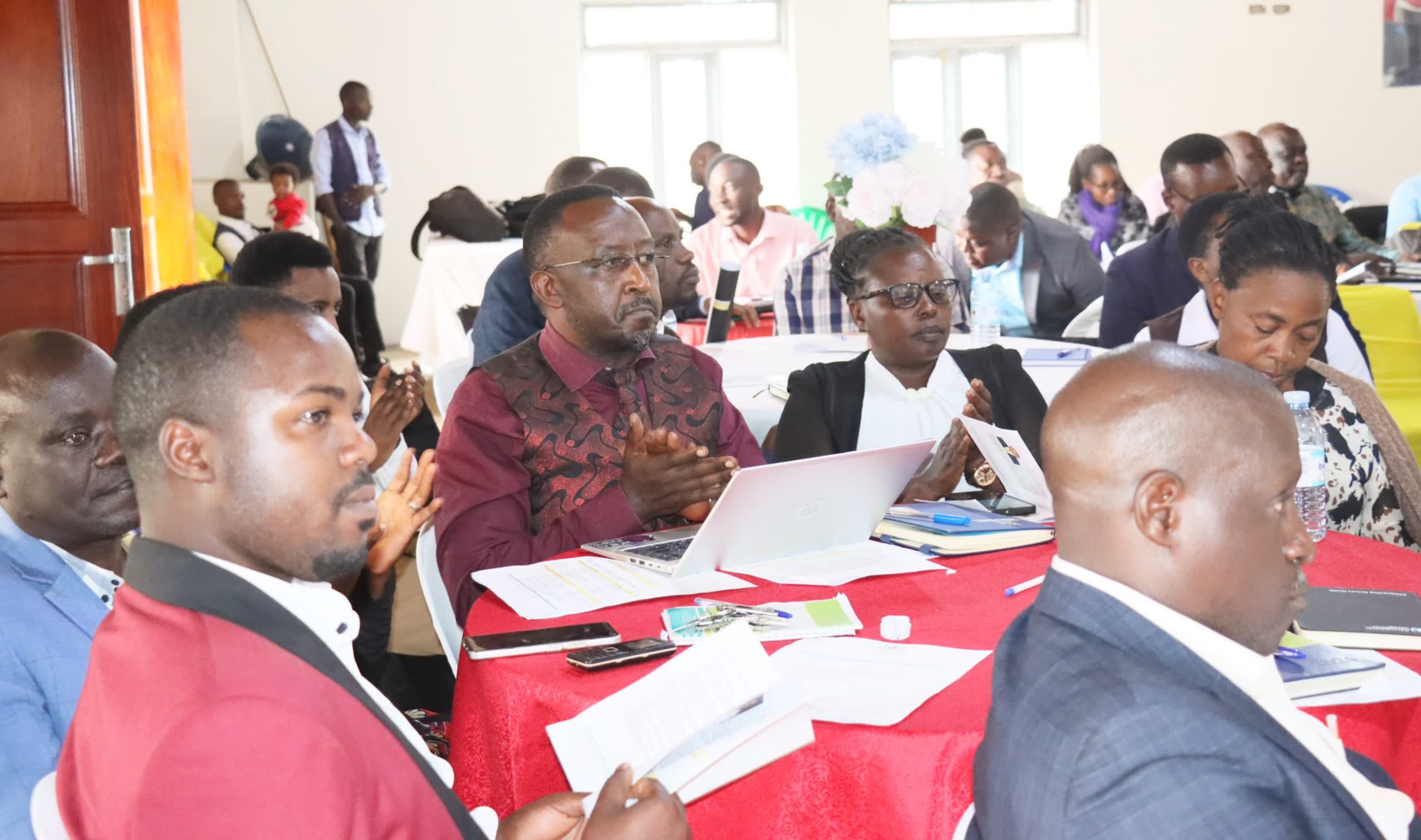
Thank you for reading this post, don't forget to subscribe!The Minister made this announcement while addressing participants at the 4th Kigezi Joint Health Review Mission (JRM), hosted by Rubanda District.
The three-day annual event, convened by Kabale Regional Referral Hospital on behalf of the Ministry of Health, aims to assess healthcare service delivery, rank district performance, and identify solutions to key health challenges affecting communities.
Minister Baryomunsi stated that in August this year, he had notified Parliament of President Yoweri Museveni’s proposal for a Pay As You Earn (PAYE) exemption for medical workers in Uganda, another step aimed at improving the welfare of workers at public health facilities.
However, he cautioned that this time, the government will require full-time commitment from medical workers whose salaries have recently been increased alongside those of other scientists.
Dr. Baryomunsi specifically pointed out public health workers who are also employed at privately owned clinics, laboratories, and pharmacies, saying that they will be required to choose whether to work for the government or remain in private practice.
The Minister said that if the new policy is approved, only medical workers seeking to work in the private wings of government-owned hospitals will be granted exemptions, on the condition that they share half of the income generated per patient.
“For instance, Kabale Regional Referral Hospital has a fully-fledged private wing. If you are a consultant, you will be allowed to treat patients from the private wing and share half of the money paid by those patients,” he explained.
Baryomunsi emphasized that the primary goal of this policy is to ensure that medical workers dedicate quality time to Ugandans seeking health services at public facilities.
CUE IN:BARYOMUNSI ON MEDICAL WORKERS ENG/RR
Although the Cabinet initially approved a six-month period for this initiative, starting August 18 this year, the Minister stated that he would complete drafting the comprehensive proposal and submit it to Cabinet for approval, followed by Parliament, before the end of October.
He added that the proposed tax waivers would enable medical practitioners to take home their full salaries without deductions, eliminating any excuses related to non-performance.
CUE IN: BARYOMUNSI ON TAXES ENG/RR
The idea received a positive response from health officials in the Kigezi sub-region. Rubanda District Secretary for Health and Education, Mr. Obed Mutatiina Kitabutuka, said that the policy would help reduce absenteeism at public health facilities.
CUE IN: KITABUTUKA ON MEDICAL WORKERS. ENG
Rubanda District Health Officer (DHO), Dr. David Mporampora, expressed support for the policy, emphasizing that the ban on public health workers’ double employment was long overdue.
He argued that when health workers are under pressure to perform in both government and private facilities, their focus becomes divided, which affects the quality of services they provide.
CUE IN: DR. MPORAMPORA ON MEDICAL WORKERS. ENG
Dr. Gilbert Mateeka, the Kabale District Health Officer, welcomed the government’s tax waiver and accountability measures but expressed concern about restricting highly qualified practitioners to government facilities only.
He noted that the limited number of such specialists makes exclusive government service impractical, given the high demand for their skills across multiple locations.
“There are some highly qualified cadres in health, but the supply is still very limited. Attempting to restrict them to serve only the government may not be feasible,” he said.
CUE IN: DR. MATEEKA ON MEDICAL WORKERS. ENG
The 4th Kigezi Joint Health Review Mission remains a vital platform for dialogue among health officials, district leaders, and the Ministry of Health as they collectively tackle healthcare challenges across the region.
About the Author