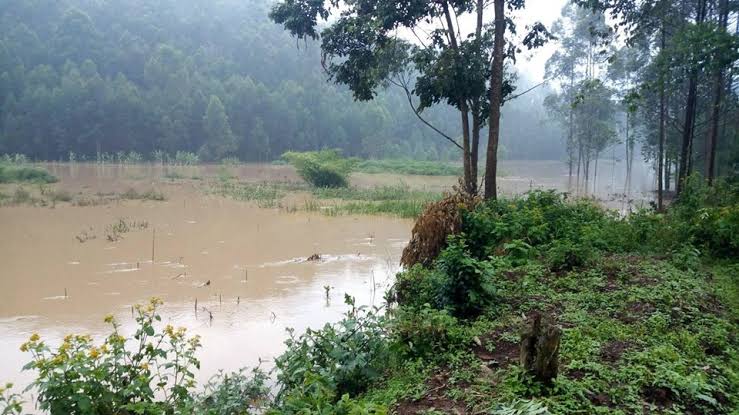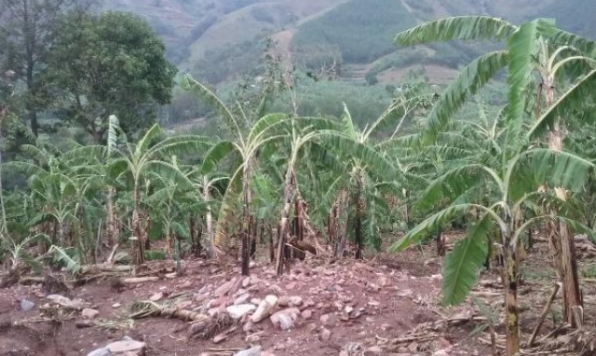
RUBIRIZI, UGANDA – Over 30 families were left devastated after a heavy downpour caused widespread destruction in Rubirizi’s Ryeru Sub-county, leaving communities in a state of despair and facing imminent food insecurity.
Thank you for reading this post, don't forget to subscribe!The affected residents of Nyamisekye and Mugogo III villages are now counting immense losses after the rainstorm washed away their primary sources of food and income.
The storm, which struck earlier this week, destroyed vast gardens of essential crops, including cassava, matooke, beans, and vegetables, and even swept away household latrines, compounding the humanitarian crisis.
Ms. Turyahikayo Jane, one of the victims, lamented that the heavy rain has destroyed livelihoods, leaving families without income or food and struggling to access basic necessities due to impassable roads.
“The rain has left us with nothing. Our gardens are gone, and with them, our income. We are now staring at prolonged hunger and poverty. The stress is unbearable, and the poor state of our roads makes it impossible to even transport what little remains,” Turyahikayo said.
Amos Tumwebaze stated that the situation is dire, with families having nothing to cook and now desperately appealing to leaders and the government for help.
He issued a grave warning about the long-term consequences, noting that most households depend entirely on their banana plantations for daily survival and to pay school fees.
“Some of us took out loans for these very projects that have now been washed away. How will we pay back the loans or afford school fees now? Without intervention, food insecurity will be our biggest problem,” Tumwebaze stated.
Nyamisekye Village LC1 Chairperson Muramuzi Anatori made an urgent appeal for relief aid, revealing this is the third such disaster to strike the area without any assistance ever being received.
He called for stronger disaster-response mechanisms from authorities and urged the community to adopt long-term resilience strategies like climate-smart farming and tree-planting to mitigate future risks.
“It is high time our residents embraced climate-smart farming and planted more trees to protect the environment. This is the only way we can mitigate such risks in the future,” Muramuzi said.
As families sift through the mud and debris, their immediate future hangs in the balance, with their cries for assistance echoing the growing urgency for climate adaptation and robust disaster management in the region.
About the Author