KAMPALA – The approximately 1.64 million households across Uganda are headed by older persons who are caring for an estimated 5.9 million dependents, primarily orphans and vulnerable children in need of care and support.
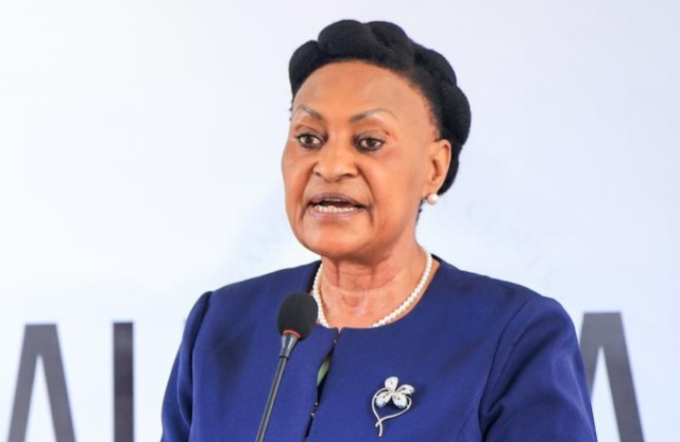
Thank you for reading this post, don't forget to subscribe!The revelation was made by the Minister of State for Elderly Affairs, Hon. Jacqueline Mbabazi (MP), during a press briefing at the Uganda Media Centre in Kampala ahead of the commemoration of the International Day of Older Persons in Uganda.
This year’s celebration, themed “Ageing with Dignity: Strengthening Care and Support Systems,” is slated to be held virtually at State House, Entebbe, presided over by the President as Chief Guest, and broadcast through media platforms across the country.
According to the 2024 Census report, approximately 2.3 million Ugandans are aged 60 years and above, about 5% of the population, a figure projected to reach 2.6 million by mid-2026 and expected to grow rapidly.
Minister Jacqueline revealed that 1.64 million households in Uganda are headed by older persons caring for about 5.9 million dependents, mainly orphans and vulnerable children, bringing the total care burden to 7.5 million people under the care of older persons.
She highlighted several challenges that older persons continue to face, including limited access to formal social security, with only about 7% of Ugandans covered and most rural older persons working in the informal sector.
The Minister noted that about 99% of households of older persons lack friendly facilities for sanitation, with many using squat-pit latrines instead of sit-latrines better suited to their weaker muscles and bones.
“Older persons continue to face serious challenges with about 99% of households of older persons lacking friendly sanitation facilities, with many forced to use squat-pit latrines instead of sit-latrines better suited to their weaker muscles and bones,” the Minister noted.
She revealed that 95.5% of older persons lack health insurance, with out-of-pocket spending nearly three times higher than the general population, while Government has only one Geriatrician and four Social Gerontologists for 2.6 million older persons.
The Minister noted that access to Parish Development Model (PDM) funds by older persons remains below 3% instead of the allocated 10%, largely due to ageism, the belief that loans may cause them stress and ill health.
The Minister outlined several government programs aimed at supporting older persons, including the Senior Citizens Grant under SAGE, which made payments to 318,649 older persons in FY 2025/2026, mainly those aged 80 years and above.
She also cited the Special Enterprise Grant for Older Persons (SEGOP), launched in FY 2022/2023 for those aged 60 to 79 years, which has so far benefited more than 2,948 groups representing 18,631 individual beneficiaries.
Under the Parish Development Model, 10% of funds have been allocated to older persons to support household income generation, while Government is also working to strengthen geriatric care and pilot a health insurance scheme.
“In FY 2025/2026, 318,649 older persons, mostly aged 80 and above, received SAGE payments. The Special Enterprise Grant for Older Persons, launched in 2022/2023 for those aged 60 to 79, has supported 2,948 groups, 18,631 beneficiaries. Government allocated 10% of PDM funds to older persons to support their livelihoods,” said Minister Jacqueline.
Additionally, the Ministry is developing an Elder Abuse Reduction Programme to prevent and respond to elder abuse, including strengthening reporting and coordination among responsible institutions.
About the Author