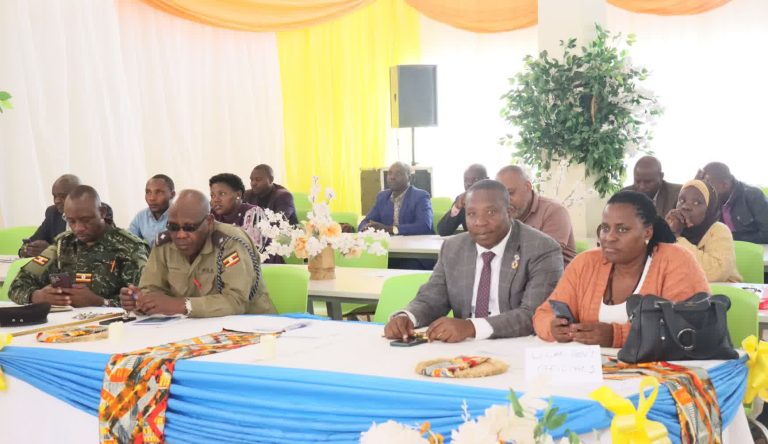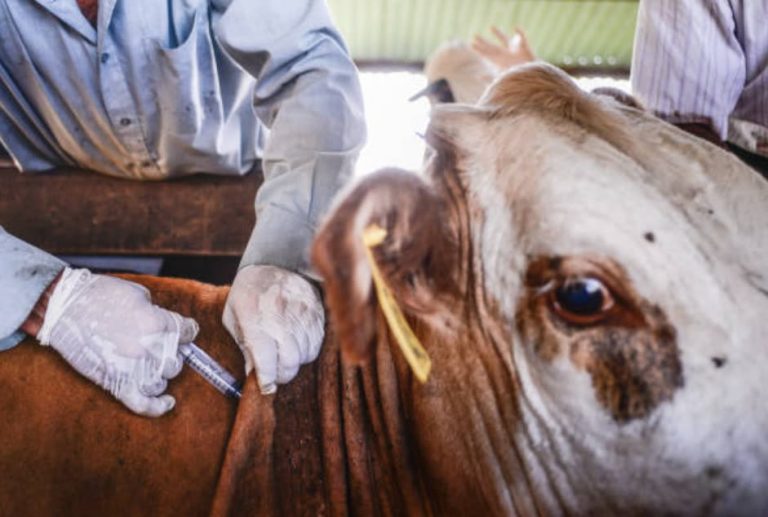
RUKUNGIRI – Livestock farmers in Rukungiri District have been urged to comply with the government’s mandatory Foot and Mouth Disease (FMD) vaccination program to avoid a Shs 2 million fine for non-compliance.
Thank you for reading this post, don't forget to subscribe!The directive was issued by District Production Officer Pius Kwesiga Onek, ahead of the exercise, which will cover cattle, pigs, goats, and sheep, and requires farmers to register with veterinary officers at their sub-counties before the August 30 deadline.
Under the government’s cost-sharing programme, farmers are required to pay Shs 8,000 per dose for cattle and pigs, and Shs 4,000 for goats and sheep, while the government covers 80 percent of the vaccination cost.
Kwesiga cautioned that farmers who miss the August 30 registration deadline will forfeit the government subsidy and could subsequently be liable for the full cost of vaccination.
CUE IN: KWESIGA CAUTIONS FARMERS. RR
He said unvaccinated animals will also not be allowed to move to markets or slaughter facilities for sale, as the government strengthens measures to control the spread of FMD.
The first phase of the nationwide vaccination exercise is currently underway across districts, running from July to August 2026, with the second phase scheduled for January and February 2027.
Kwesiga urged local leaders and farmers to work with veterinary officers to mobilise livestock owners and ensure animals are vaccinated on time, rather than risk penalties or movement restrictions.
CUE IN: KWESIGA ON DEADLINE. RR
The nationwide cost-sharing programme was detailed in Parliament on August 5 by the Minister of State for Agriculture, Hon. Desire Muhooza, with the Ministry of Agriculture, Animal Industry and Fisheries confirming it has secured 53.6 million vaccine doses for the campaign.
According to the government, the cost-sharing model is designed to ensure sustainable financing for FMD control, following previous fully funded campaigns that were hampered by funding shortfalls and vaccine supply challenges.
The government is also planning to establish a local vaccine manufacturing facility to reduce reliance on imported vaccines and lower costs in the future.
About the Author